
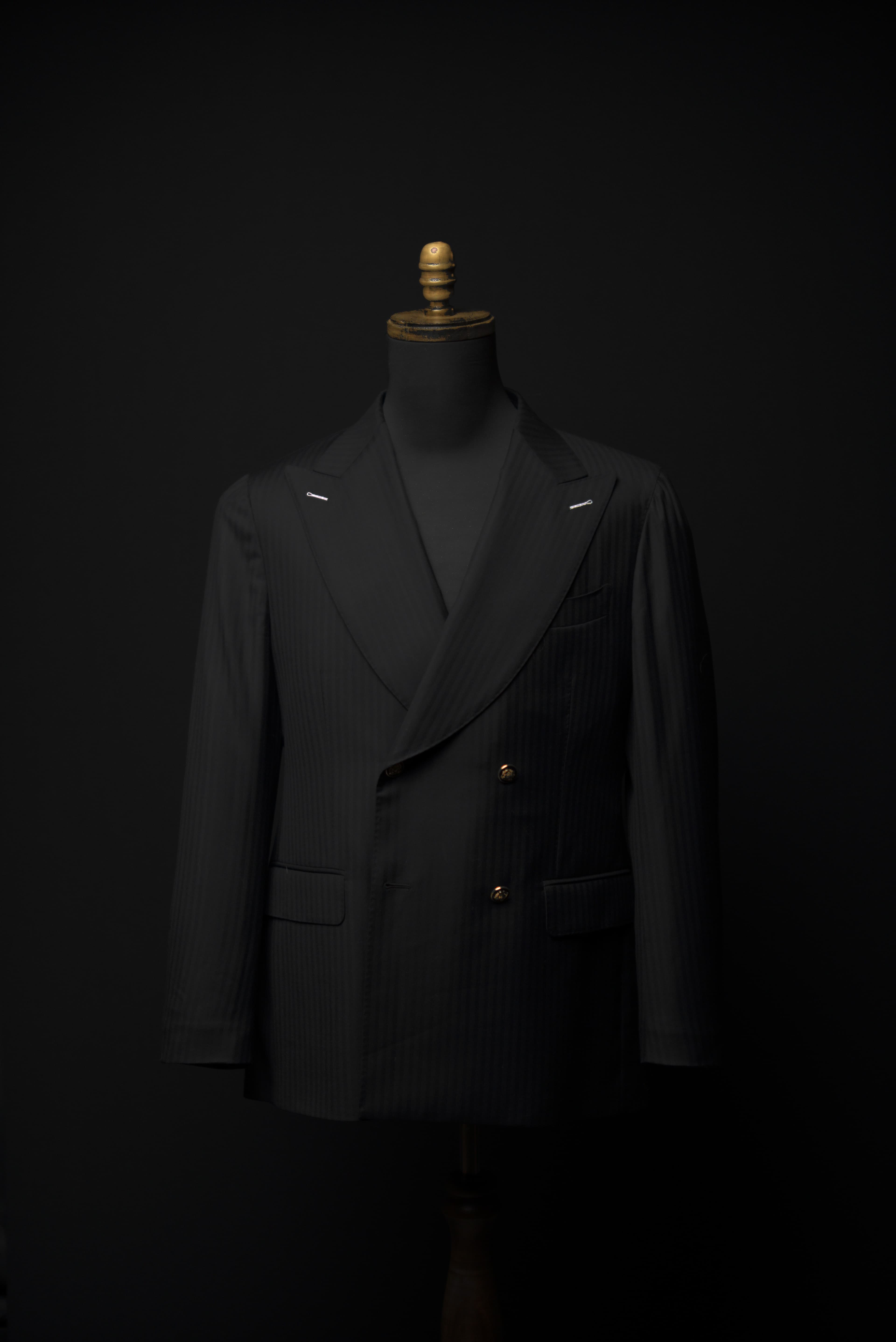
From$999
Made-to-measure starting investment. Suits, with custom blazers from $499 and bespoke shirts from $199. The right tier for most ministry rotations.
Custom tailoring for senior pastors, ministry directors, parachurch leaders, and denominational executives. Mobile fittings at your church, office, or home across Sacramento and the Bay Area. Sam Cole comes to you.
Crowned Legacy Suits serves leaders in ministry with custom tailoring across Sacramento and the Bay Area. Made-to-measure from $999, four to eight weeks to delivery. Bespoke from $5,000, three to six months. Mobile fittings at your church, office, or home.
The ministry wardrobe is asked to span more registers than almost any other professional wardrobe. Sunday preaching from a platform. Weekday meetings with elders, deacons, and staff. Hospital and home visitation, often inside the same afternoon. Weddings as officiant. Funerals as officiant. Denominational conferences. Ordination and installation services. Increasingly, speaking engagements that put pastors in front of audiences who expect a different register than the small-church Sunday congregation. The wardrobe needs to span every one of these without becoming costume in any of them.
What the right wardrobe does for a ministry leader is recede. It does not announce itself from the pulpit. It does not draw the eye of the family at the funeral home. It does not photograph as the subject when a denominational publication runs a portrait. It earns the room and then disappears into the work that brought the leader into the room in the first place.
"Ministry leaders carry weight other professions do not. The wardrobe should respect the calling without performing it. What I see in the leaders I serve is that the right wardrobe disappears into the work. The wrong wardrobe pulls attention away from it."
The working rotation for a senior ministry leader usually settles around two to three suits in conservative cloth (navy, charcoal, or mid-grey) that handle the bulk of preaching and weekday formal obligations. At least one black or charcoal suit lives in the rotation specifically for funerals, where the cloth has a job distinct from the rest of the calendar. Custom blazers earn their place at staff meetings, conferences, and speaking engagements where a full suit reads too formal for the room.
Custom dress shirts in white, light blue, and discrete patterns handle the daily wear without fighting the suit. Bold patterns, French-blue stripes, and high-contrast collars are better saved for civilian wardrobes; on a pulpit and under stage lighting they read as distraction rather than detail. A tuxedo earns its place if you officiate black-tie weddings. See tuxedos for officiating black-tie ceremonies. A refined casual register rounds out the wardrobe for staff meetings, hospital visits, and community engagement.
What does not belong in the ministry rotation: high-sheen mohair blends, heavy windowpanes that flare on camera, statement linings visible at a casual lapel flip, and aggressive cuts that age out inside two seasons. Conservative reads correctly across denominational and generational audiences and ages well across the years a calling actually runs.
The first consultation runs ninety minutes at your church office, your home, or a private space at a denominational office. The cloth library and measurement tools travel with Sam; the leader being fitted does not commute, does not park, does not rearrange a week of pastoral commitments around a showroom appointment.
Cloth selection is guided by the ministry register. Conservative as default, with seasonal variation allowed where the calendar rewards it. Twenty-eight to thirty-two measurements are taken. The pattern is adjusted, the cloth is cut, and the suit is built across the next four to eight weeks. The second fitting brings the finished garment back to your office; adjustments are marked and the suit returns briefly to the bench for finishing.
Mobile fittings happen at churches, parsonage homes, and denominational offices across Sacramento, Roseville, Folsom, El Dorado Hills, and the Bay Area, including San Francisco, Palo Alto, Walnut Creek, San Jose, and Oakland. Travel to outlying communities is arranged on request when the calendar supports it.
Ministry compensation varies widely across the calling. Senior pastors of established churches typically commission at executive tiers; small-church pastors and parachurch leaders commission at the made-to-measure tier. The page meets both audiences.
From$999
Made-to-measure starting investment. Suits, with custom blazers from $499 and bespoke shirts from $199. The right tier for most ministry rotations.
From$5,000
Bespoke starting investment for senior ministry roles, denominational executives, and second-stage commissions where the wardrobe history is already settled.
Per-garment pricing follows the standard service tiers. Ministry leaders building wardrobes across multiple commissions are extended courtesies appropriate to the relationship. Final investment depends on cloth selection, garment count, and commission order.
Specific moments shape ministry wardrobe planning more than any abstract sense of need. Easter and Christmas services, often the highest-attendance Sundays of the year, photograph widely through church publications and social media; the suit worn that morning will appear in still images and clips for years. Ordination and installation services carry their own register: formal denominational ceremonies that demand a wardrobe coherent across multiple participants and a long sequence of photographs.
Major weddings and funerals where ministry leaders preside as officiants carry their own cloth requirements; for officiating black-tie ceremonies, see the dedicated guide on tuxedos. Denominational conferences and assemblies (annual presbytery, conference, district, or convention meetings) produce a steady cadence of dinners, plenary sessions, and side-room conversations where the wardrobe is read by colleagues across a wider circle than the local congregation sees.
Speaking engagements at conferences, retreats, and other churches are increasingly common for senior leaders. So are the annual photographs commissioned for church directories, websites, publications, and the press releases that follow major appointments. Each of these is a scheduled moment where the wardrobe is doing visible work; planning the rotation around them produces a coherent answer rather than a last-minute scramble.
Senior pastors of established churches. Ministry directors at multi-staff churches. Parachurch executives leading mission organizations, Christian schools, denominational offices, and ministry nonprofits. Denominational leaders: bishops, district superintendents, presbytery executives, conference ministers. Worship pastors and associate pastors building toward senior roles. Christian school administrators and college chaplains.
The honest framing: this is for ministry leaders who recognize that wardrobe is part of vocational presentation, not separate from it. The leaders who commission well are the ones who have already noticed the gap between the room they are walking into and the wardrobe they have been walking in with. The first consultation is a working session about what the calendar asks and what the closet currently answers, not a sales appointment.
Senior ministry roles whose wardrobe spans formal evening events sometimes add a tuxedo to the rotation. Wedding officiants in particular benefit from the dedicated guide on officiating attire for black-tie weddings.
The first session is ninety minutes at your church office, your home, or a denominational office of your choosing. The cloth library arrives in the case. Four to eight weeks later, the suit is yours.
Reserve a consultationSacramento · Bay Area · 916.520.4106 · By appointment only
By Appointment Only · Sacramento + Bay Area
Discuss the suits you wear, what fits poorly and what your working week requires.
Last updated: